Streaming Stick vs Streaming Box vs Smart TV: Why Your Kids' Room Matters
Streaming stick vs streaming box for a kid's bedroom: outlet placement, parental controls, and which device actually enforces bedtime.
Most buying guides compare streaming devices on picture quality and app selection. That is the wrong lens when you are shopping for a kid’s bedroom. The real questions are: where are the outlets in that room, what happens when a 9-year-old discovers they can side-load apps, and can you actually cut off the TV at 9pm without walking down the hall every night? Those three things should drive your decision more than whether something supports Dolby Vision.
Here is how the formats actually stack up for the specific constraints of a bedroom setup.
Outlet Placement Reality: Why Streaming Boxes Fail in Bedrooms
A streaming box like the Fire TV Cube needs its own power outlet. That sounds trivial until you look at the average kid’s bedroom: one or two outlets on a single wall, usually near the door or a desk, not behind the TV. Running a power cable across the room is a tripping hazard and a temptation for kids to yank at cords. It also means one more item sitting on a surface where it can be knocked over, spilled on, or hidden under a pile of clothes.
Streaming sticks solve this completely. The Roku Streaming Stick Plus plugs directly into the TV’s HDMI port and, critically, powers from the TV’s USB port. No outlet required. No cable run across the room. The device disappears behind the TV entirely, which also means it is harder for a kid to physically interact with it, reset it, or lose the remote by pulling on cords.
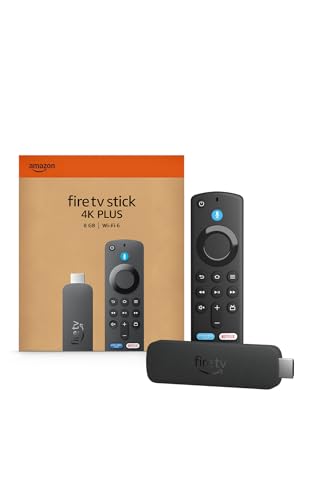
The Fire TV Stick 4K Plus follows the same physical logic: HDMI in, USB power from the TV. If the TV has a live USB port, you are done.
This is not a minor convenience point. In a shared bedroom or a small room with limited outlet access, the physical footprint of a streaming box genuinely rules it out for a lot of installs. The Cube at $139.99 is a capable device, but its outlet requirement makes it a living room product, not a bedroom product.
Parental Controls: Where Roku and Fire Differ
This is where the choice between Roku and Amazon Fire OS matters most, and the differences are specific enough to affect daily life.
Roku’s parental controls are PIN-based and apply at the platform level. You can set a PIN requirement for purchasing, for launching specific channels, and for accessing content above a certain rating. Roku’s system also supports a “Guest Mode” that restricts the account. The limitation is that Roku’s controls are not time-based natively. You cannot tell the Roku to shut off at 9pm through the device’s own settings. That requires either a smart plug or router-level scheduling.
Amazon’s Fire TV parental controls go further in one important direction: Amazon Kids (formerly FreeTime) is a first-party subscription service that runs directly on Fire TV devices. For $4.99 per month per child (or included with Amazon Kids+ at $9.99/month for up to four kids), you get a full child profile with daily time limits, bedtime curfews, and content filtering by age group. The Fire TV Stick 4K Plus supports Amazon Kids profiles directly. When the daily limit hits, the TV stops. The kid cannot override it without the parent PIN.
That is a meaningful difference. If enforcing screen time without relying on a smart plug or router schedule matters to you, the Fire TV ecosystem has the native tooling to do it. Roku requires a workaround.
One caveat: Amazon Kids only filters Amazon’s own content ecosystem cleanly. YouTube, for example, does not integrate with Amazon Kids restrictions. If a kid navigates to the YouTube app on a Fire TV with an Amazon Kids profile, the content filtering gets spottier. The same problem exists on Roku. There is no streaming platform that perfectly walls off all third-party apps, which is why router-level controls (like those on Eero or Google WiFi) remain a useful second layer regardless of which device you choose.
WiFi Performance in Bedrooms vs Living Rooms
Bedrooms are typically farther from routers than living rooms, and they often have more walls, including insulated exterior walls, between the device and the access point. This matters when you are comparing Wi-Fi 5, Wi-Fi 6, and Wi-Fi 6E support across devices.
The Roku Streaming Stick Plus supports dual-band Wi-Fi but does not specify Wi-Fi 6 support in its current generation specs. For a bedroom 20 to 40 feet from a standard router, that is usually fine for 4K streaming, which requires roughly 25 Mbps according to Netflix’s own published recommendations. If the household internet connection is solid and the router is reasonable, Wi-Fi 5 handles 4K without issues in most homes.
The Fire TV Stick 4K Plus steps up to Wi-Fi 6, which improves throughput in congested environments. In a home with 10 or more connected devices, Wi-Fi 6’s OFDMA technology handles multiple simultaneous device connections more efficiently than Wi-Fi 5. That is a real benefit in a household where multiple rooms are streaming at the same time.
The Fire TV Cube supports Wi-Fi 6E, which adds the 6 GHz band. That band has less interference and higher potential throughput, but it requires a Wi-Fi 6E router to take advantage of it. Most households are not there yet. For a kid’s bedroom specifically, the Cube’s Wi-Fi 6E support is overkill, and the box form factor is the wrong fit regardless.
If the bedroom has genuinely poor signal, none of these devices will fix it. A better first investment is a mesh node or a powerline adapter for that room. But between the Roku and the Fire Stick at similar price points, the Fire Stick 4K Plus’s Wi-Fi 6 support is a real advantage in a device-dense home.
Cost Per Streaming Device Over 3 Years
The sticker price comparison is straightforward: the Roku Streaming Stick Plus is $39.99, the Fire TV Stick 4K Plus is $49.99, and the Fire TV Cube is $139.99. But the three-year cost looks different depending on what you add.
For a bedroom with kids, Amazon Kids or Amazon Kids+ is the realistic add-on if you want native time controls. At $9.99 per month for the family plan, that is $119.88 per year, or roughly $360 over three years. Added to the Fire TV Stick 4K Plus, the three-year total reaches about $410. That is the real cost of the Fire ecosystem’s parental control advantage.
Roku at $39.99 with no subscription for the device itself stays at $39.99 upfront. If you pair it with a smart plug for scheduling (roughly $10 to $15 for a basic model), you are at about $55 total. The trade-off is manual setup of schedules and no age-based content filtering at the platform level.
Smart TVs with built-in streaming deserve mention here. A budget 32-inch smart TV for a bedroom runs $150 to $200. The parental controls on most smart TV platforms, including those from TCL (Roku TV), Hisense, and Samsung, range from decent to inconsistent. Roku TV’s controls mirror Roku’s stick controls. Samsung’s parental controls are PIN-based with content rating locks but lack native time scheduling. For the bedroom use case, a budget TV plus a Roku stick often gives better control than an integrated smart TV platform on a mid-range set.
Setup Complexity for Non-Tech Parents
This is worth addressing directly because bedroom devices often get set up by whoever is most comfortable with tech in the household, but parental controls get managed by everyone.
Roku’s setup is widely considered the most approachable of the major platforms. The interface is a grid of tiles, the settings menu is clearly labeled, and PIN setup for purchases and content takes under two minutes. There is no Amazon account required, no ecosystem to opt into.
Amazon Fire TV setup requires an Amazon account, and Amazon Kids setup requires navigating the parent dashboard, which lives partly in the Amazon Parent Dashboard website and partly in the device settings. It is not complicated, but it is a multi-step process across two interfaces. For households already embedded in Amazon’s ecosystem with Prime memberships, this is frictionless. For households without Amazon accounts, it adds friction.
Neither device requires technical knowledge to operate day to day. Both have voice remotes. Both support automatic software updates. For a parent who wants to set it once and not think about it again, Roku’s simplicity wins for basic installs. For a parent who wants active time management and is already using Amazon, Fire TV’s native controls justify the extra setup time.
The Roku Streaming Stick Plus at $39.99 is the right call for bedrooms where outlet access is limited and the priority is simplicity. It powers from the TV’s USB port, disappears behind the set, and delivers 4K with HDR on a platform that kids can navigate easily. Pair it with a smart plug if bedtime scheduling matters.
- 4K streaming with HDR color
- Voice remote control
- Powers from TV via HDMI
- 500+ free live TV channels
- Compact design with neighboring HDMI port clearance
Streaming device supporting 4K video and HDR with voice remote control for TV applications.

The Fire TV Stick 4K Plus at $49.99 earns its $10 premium if you are managing screen time actively. Wi-Fi 6 support handles congested home networks better, and Amazon Kids integration means bedtime curfews and daily limits are enforced at the device level, not the outlet. For households already using Amazon Kids+, the parental control layer is essentially built into the subscription you already have.
- 4K Ultra HD streaming
- Wi-Fi 6 support
- Dolby Vision
- HDR10+
- Dolby Atmos
- Xbox Game Pass cloud gaming
- Alexa Voice Remote with smart home control
4K streaming device with Wi-Fi 6, Alexa voice search, and Xbox Game Pass support
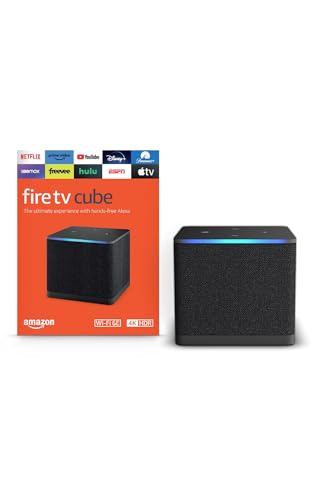
The Fire TV Cube at $139.99 is genuinely powerful, with an octa-core processor, Wi-Fi 6E, and hands-free Alexa. For a living room or home theater setup, it makes sense. For a kid’s bedroom, the outlet requirement and the price point make it the wrong tool. Save it for the main TV.
- 4K Ultra HD with Dolby Vision and HDR
- Wi-Fi 6E support
- Octa-core processor
- Built-in microphone and speakers
- Hands-free Alexa voice control
- Smart home device integration
Streaming media player with 4K output, Wi-Fi 6E, and hands-free Alexa control for TV and smart home devices
The bedroom is not the living room. The constraints are different, the stakes are different, and the device that wins on a spec sheet is not always the device that works best at 9pm when someone is supposed to be asleep.
As an Amazon Associate I earn from qualifying purchases. • Full affiliate disclosure