Ring vs Nest Security Cameras 2026: Specs and Prices
Ring and Nest camera comparison: field of view, night vision, pricing, and video quality. Side-by-side specs for your home.
If you search Reddit for home security camera advice, Ring comes up roughly eight times for every three mentions of Nest. That gap is significant, but it doesn’t automatically mean Ring is the better camera for your specific setup. What it means is that Ring has a broader installed base, a lower entry price, and tighter integration with the most popular budget smart home ecosystem. Nest, meanwhile, attracts a smaller but vocal group of users who prioritize video quality, Google Home integration, and a more privacy-focused architecture.
This comparison breaks down what both cameras actually deliver across the things that matter most: resolution, night vision, storage costs, ecosystem fit, and real-world reliability. Both products covered here are wired options, which consistently dominate the practical recommendations in home security threads because battery cameras introduce maintenance overhead and the occasional missed clip from a depleted cell.
Video Resolution and Night Vision Performance
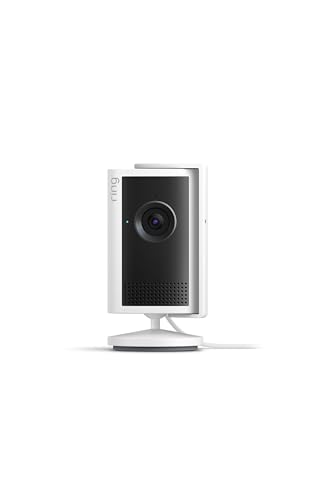
The Ring Indoor Cam (Wired) shoots at 2K resolution using what Ring calls “Retinal 2K,” with 4x Enhanced Zoom built in. That zoom capability is more useful than it sounds for indoor placement. If you mount the camera in a corner and need to identify a face at the far end of a room, digital zoom at this resolution leaves enough detail to be useful. Night vision is handled through Ring’s Low-Light Sight feature, which processes low-light scenes rather than simply switching to infrared-only mode.
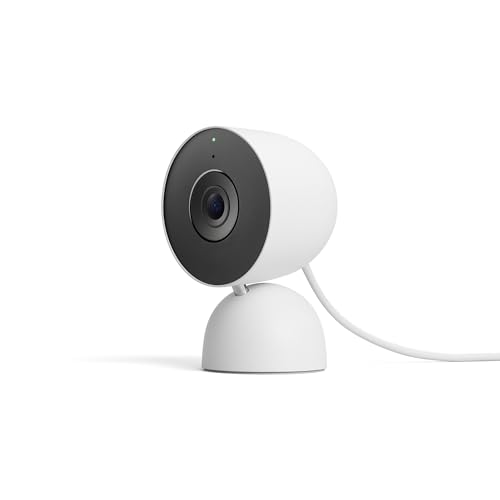
The Google Nest Cam (Indoor, Wired, 3rd Gen) also shoots at 2K, but pairs that resolution with HDR. The HDR spec matters in real-world situations where a window is in the camera’s field of view. Without HDR, bright backgrounds blow out and subjects in the foreground go dark. The Nest Cam’s 2K HDR is described by Google as its highest resolution yet for the Nest lineup. The 2025 model also integrates Gemini-based analysis, which feeds into smarter event detection and notification filtering.
On pure resolution, these two cameras are evenly matched. The Nest’s HDR advantage is real in high-contrast scenes. Ring’s 4x zoom is a practical edge for rooms where physical placement options are limited.
Cloud Storage Pricing and Subscription Models
This is where the two ecosystems diverge most sharply, and it’s a recurring topic in Reddit threads comparing the two brands.
Ring requires a Ring Protect subscription to save and review video footage. The Basic plan runs $4.99 per month per device and covers 180 days of event-based video history. The Ring Protect Plus plan runs $10 per month for a single location and covers all Ring devices at that address, including a ring doorbell if you have one. Without any subscription, Ring cameras will still send motion alerts, but you cannot review any recorded footage. That is a hard limitation that threads consistently flag as a frustration point for new buyers who didn’t read the fine print.
Google Nest uses Google Home and the Nest Aware subscription. Nest Aware runs $8 per month and covers all cameras on the account, with 30 days of event history. Nest Aware Plus is $15 per month and extends that to 60 days of event history plus 10 days of continuous 24/7 recording. If you already pay for Google One storage, check whether your tier includes Nest Aware, as Google has bundled them in certain plans.
The practical math: for a single camera, Ring’s Basic plan at $4.99 is cheaper than Nest Aware at $8. For a household with four or more cameras, the Ring Protect Plus location plan at $10 per month becomes very competitive, particularly because Nest Aware’s per-account pricing already covers multiple cameras. If you are starting with one camera but expect to expand, Nest’s model scales better without price jumps.
Integration With Existing Smart Home Ecosystems
Ring is an Amazon company. The integration with Alexa is native and deep. You can pull up a live camera feed on any Echo Show device, trigger automations based on Ring motion events, and tie Ring cameras into Alexa routines without any workaround. If your household already runs on Alexa-connected lights, locks, and speakers, Ring slots in without friction.
Ring also supports Matter and works with Apple Home and Google Home, though the functionality is narrower than the native Alexa experience. Reddit users running mixed ecosystems report that cross-platform Ring integrations work, but advanced automation logic generally requires either Alexa routines or Ring’s own app.
The Google Nest Cam is built around Google Home and works with Google Assistant natively. For households already running Nest thermostats, Nest doorbells, or Google-connected devices, the Nest Cam feeds into a single Google Home dashboard cleanly. The Gemini integration in the 2025 model means event notifications can include more specific descriptions rather than just “motion detected.”
Nest Cam also supports Matter, which means it can participate in broader smart home setups. However, the deepest feature set, including Gemini event analysis and timeline review, stays within the Google Home ecosystem.
If you’re already invested in Amazon devices, Ring is the obvious fit. If you’re running Google Home throughout the house, the Nest Cam is the stronger choice. For households that haven’t committed to either, Ring’s lower entry price makes it easier to start without a significant upfront investment. If you need outdoor coverage to pair with either of these indoor cameras, the Reolink RLC-810A is the PoE outdoor camera worth pairing with either system — no cloud subscription required for local recording, and it runs cleanly on your home network regardless of which indoor camera ecosystem you choose.
Reliability and Uptime From User Reports
Reddit discussions on this topic consistently praise wired cameras over battery ones for reliability, and both of these products are wired, so the baseline is solid. The specific reliability issues that come up in threads differ between the two brands.
Ring cameras generate occasional complaints about cloud service outages affecting video review and notification delivery. Ring experienced a notable outage in late 2023 that prevented users from accessing recorded footage for several hours. Amazon’s AWS infrastructure underpins Ring’s cloud backend, which is generally highly available but not immune to disruption.
Nest Cam complaints tend to focus on the Google Home app rather than the camera hardware itself. Users report that Google Home has gone through enough interface changes over the years that certain features have disappeared or been reorganized unexpectedly. The camera hardware itself draws fewer reliability complaints. Encryption at the device level and two-step verification through the Google Account add a layer of security that Nest users cite as a reason they chose the platform.
Both brands carry generally positive long-term reliability ratings in aggregated review data. Neither has a consistent pattern of hardware failure. The differences are more about software stability and cloud dependency than physical durability.
Installation Requirements and Placement Flexibility
Both cameras require a power outlet nearby since they’re wired models. That’s the primary placement constraint for both. The Ring Indoor Cam at $59.99 ships with a standard mounting base designed for flat surfaces and comes with the cable routing hardware you need for a clean wall mount. The compact form factor lets it sit on a shelf or mount in a corner bracket.
The Google Nest Cam (Wired, 3rd Gen) at $99.99 uses a magnetic mount that the Nest line has used for several generations. The magnetic base means repositioning is quick. That’s useful for renters or anyone who wants to test a few different angles before committing to drilling. The tradeoff is that the magnetic mount is less secure than a screwed bracket if someone tries to physically remove the camera.
For homes with complex layouts, like a two-story house where coverage requires cameras at awkward angles, the Nest’s repositionable magnetic mount has a practical advantage. For straightforward placements like a living room corner or a garage entry, both cameras install similarly. And if you’re thinking about where your cameras connect on your home network, setting up a dedicated network for smart home devices is worth doing before you add more cameras to your setup.
The Ring Indoor Cam (Wired): $59.99
At $59.99, the Ring Indoor Cam delivers 2K resolution with 4x Enhanced Zoom and Low-Light Sight, which is a strong feature set at this price. The mandatory subscription for video history is the real cost to factor in, and Ring’s Alexa integration is the tightest in the industry if you’re already in that ecosystem.
- Retinal 2K for crisp
- true-to-life video quality
- 4x Enhanced Zoom
- Low-Light Sight
Capture it all with Retinal 2K video — See every detail of your home or business in full view — powered by Retinal 2K. Retinal 2K for crisp, true-to-life video quality, 4x Enhanced Zoom, Low-Light Sight
The Google Nest Cam (Wired, 3rd Gen): $99.99
At $99.99, the Nest Cam brings 2K HDR video, Gemini-powered event analysis, end-to-end encryption, and the magnetic mount that makes repositioning easy. The $40 premium over Ring is justified if you run Google Home or value the HDR quality in mixed-light environments.
- encrypted video
- two-step verification
- and enhanced security through your Google Account
- ideo is crisp and clear in 2K HDR
- Nest Cam’s highest resolution yet
Google Nest Cam Indoor (Wired, 3rd Gen) - Security Camera with 2K Video and Gemini, Night Vision, 2-Way Audio, Works with Google Home - 2025 Model
Which One Actually Makes Sense
The Reddit frequency gap, Ring at eight mentions to Nest’s three, reflects the price difference more than a clear quality verdict. Ring is cheaper to buy and cheaper per camera on its Basic plan. That math pushes first-time buyers toward Ring, and those buyers then recommend it to others.
For a household adding a single indoor camera to a Google Home setup, the Nest Cam is the right call. For anyone already running multiple Ring devices, adding another Ring camera to an existing Protect Plus location plan costs nothing extra on the subscription side. For new buyers with no ecosystem commitment and a budget focus, Ring at $59.99 with a $4.99 monthly plan is the easier starting point.
Neither camera has a meaningful reliability advantage over the other. Both shoot at 2K. The decision comes down to price, ecosystem, and whether HDR or Gemini analysis are features that matter to your specific placement needs.
As an Amazon Associate I earn from qualifying purchases. • Full affiliate disclosure