Google Nest Thermostat - Charcoal Review
An analysis of the Google Nest Thermostat in Charcoal. Learn about its Wi-Fi connectivity, C-wire compatibility, and HVAC monitoring capabilities.
As an Amazon Associate I earn from qualifying purchases.
// verdict
A reliable entry-level smart thermostat that offers dual-band Wi-Fi and easy installation for most standard HVAC systems.
The Google Nest Thermostat in Charcoal offers a way to bring automated temperature control to a modern home without requiring a complete overhaul of existing wiring. It functions as a bridge between traditional HVAC hardware and the mobile ecosystem, allowing for remote adjustments through phones or tablets. While it sits lower in the Nest product lineup compared to the Learning Thermostat, it maintains the core identity of the brand: a focus on energy efficiency and remote accessibility.
- Wi-Fi 802.11b/g/n 2.4 GHz and 802.11a/n 5 GHz
- Bluetooth Low Energy wireless interconnect
- Works without C wire in most homes
- Remote control via phone and tablet
- HVAC system monitoring with alerts
ENERGY STAR certified Wi-Fi smart thermostat that learns your schedule and adjusts temperature remot
Overview
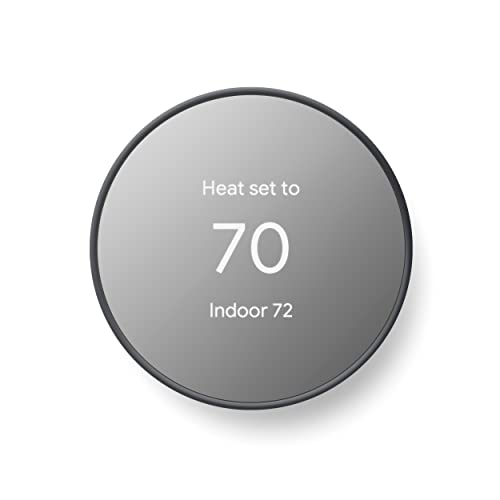
The Charcoal Google Nest Thermostat is designed for users who want a smart interface without the complexity of high-end industrial thermostats. It earns an ENERGY STAR certification, which indicates it meets specific efficiency criteria set by the government to help reduce energy consumption. The physical design is slim and minimalist, utilizing a mirrored display that hides the interface until someone approaches the device or adjusts the temperature.
This model relies heavily on its connection to the Google Home ecosystem. It is not a standalone device that operates in isolation. Instead, it links to your local network to provide updates on system health and temperature changes. The Charcoal finish provides a neutral, dark aesthetic that works well in modern interiors or rooms with darker accent walls.
Specs Analysis
When looking at the technical specifications, the connectivity profile is a major factor in its performance. The device supports dual-band Wi-Fi, specifically 802.11b/g/n on the 2.4 GHz band and 802.11a/n on the 5 GHz band. This is important because many smart home devices rely solely on 2.4 GHz, which can become crowded in homes with dozens of connected gadgets. Having 5 GHz support allows for a cleaner, faster connection to the router, which can reduce latency when you try to change the temperature from across the house.
For local communication and initial setup, it uses Bluetooth Low Energy (BLE). This allows your smartphone to communicate directly with the thermostat during the installation process, making it easier to pass credentials to the device.
One of the more critical technical claims from Google is that this thermostat works without a C wire in most homes. In many older HVAC setups, a “Common” wire (C-wire) is required to provide constant 24V power to the thermostat. Older smart thermostats often required a separate power adapter or a professional electrician to pull new wires through the walls. While Google states it works in most homes without one, this is highly dependent on the specific configuration of your heating and cooling system. If your system is older or lacks a power-sharing capability, you might still need a C-wire or a Nest Power Connector to prevent the device from losing power or causing issues with your furnace.
The device also includes HVAC system monitoring. This means it does more than just toggle the heat on or off. It can send alerts to your mobile device if it detects something unusual about your system’s performance. If the temperature drops below a certain threshold while the heat is supposed to be running, the system can notify you, which acts as an early warning system for potential mechanical failure.
Pros and Cons
Pros
- Dual-Band Wi-Fi: Support for both 2.4 GHz and 5 GHz networks improves connection stability in dense wireless environments.
- ENERGY STAR Certified: The device is built to meet federal standards for energy efficiency, which can assist in long-term energy management.
- Remote Access: The integration with mobile devices allows for complete control of the climate from any location with an internet connection.
- Minimalist Design: The Charcoal color and slim profile allow it to blend into diverse interior design styles.
- System Alerts: The ability to monitor HVAC health provides an extra layer of protection against system malfunctions.
Cons
- C-Wire Dependency: While it works without a C-wire in many cases, some systems will still require additional hardware or wiring to maintain constant power.
- Limited Features: It lacks some of the advanced “learning” algorithms found in the more expensive Nest Learning Thermostat models.
- Ecosystem Lock-in: To get the most out of the device, you must be comfortable using the Google Home app and staying within the Google ecosystem.
Who It Is For
This thermostat is a practical choice for families with multiple devices who are looking to start their smart home journey with a single, functional component. It is ideal for a two-story house where multiple thermostats might be needed to manage different zones, as the cost per unit stays relatively low compared to premium models.
If you are a renter or someone living in an older home that lacks modern wiring, the claim of working without a C-wire makes this an attractive option, provided your specific HVAC system is compatible. It is also a good fit for people who prioritize a clean, unobtrusive look on their walls. If you already use Google Assistant or Google Home products for lighting or security, the integration here is straightforward and fits into your existing workflow.
However, if you are a power user who wants a thermostat that discovers your schedule through deep machine learning or requires high-end sensors for every room, you might find this model too basic. This is a utility-focused device rather than a luxury automation hub.
Verdict
The Google Nest Thermostat in Charcoal is a capable, mid-range entry into the smart heating and cooling market. It covers the essentials: reliable dual-band connectivity, remote mobile control, and energy efficiency monitoring. While the lack of a C-wire is a major selling point, anyone installing it should verify their specific HVAC wiring first to avoid unexpected hardware needs. It is an affordable pick for those who want to transition from manual dials to a connected, monitored environment without investing in the most expensive professional-grade equipment available.
As an Amazon Associate I earn from qualifying purchases. • Full affiliate disclosure