Anker SOLIX S2000 Power Station Review
An analysis of the Anker SOLIX S2000, featuring a 2,010Wh LFP battery, 3,000W peak output, and a long-lasting lifecycle for portable power needs.
As an Amazon Associate I earn from qualifying purchases.
// verdict
With a massive 2,010Wh capacity and a high 3,000W peak output, this unit provides reliable energy for high-draw appliances and long-term camping.
Portable power stations have moved past the stage of just charging phones and tablets. The Anker SOLIX S2000 enters a segment of the market where users expect to power actual appliances: coffee makers, portable refrigerators, and even small power tools. This unit focuses on high capacity and high output while attempting to keep the physical footprint manageable. It sits in a competitive space where battery chemistry and cycle life determine the actual long-term value of the investment.
- Battery: 2010Wh LFP with 10000 cycle lifespan
- Output: 1500W continuous and 3000W peak
- Weight: 35.7 lbs (30% smaller and 25% lighter)
- Recharge: 400W solar input plus AC wall outlet
- Runtime: 35 hours operating a refrigerator
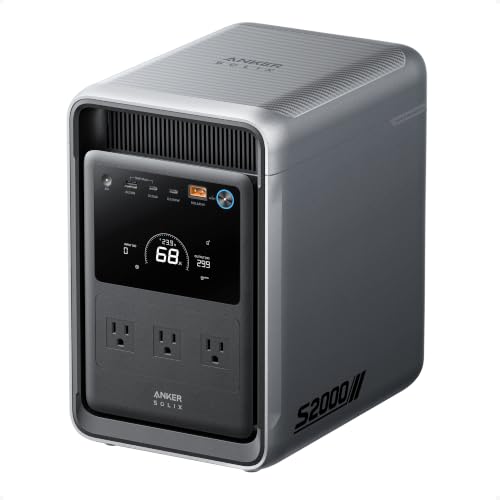
Anker SOLIX S2000 portable power station with 2,010Wh capacity and 3,000W peak output
Overview
The Anker SOLIX S2000 is built around a large energy reservoir designed for extended use. Instead of relying on standard lithium-ion cells, Anker uses Lithium Iron Phosphate (LFP) chemistry. This choice is significant because LFP is widely recognized for its stability and longevity compared to other chemistries. When looking at the core mission of this device, it is to provide a middle ground between small, lightweight power banks and massive, heavy home backup systems. It aims to be portable enough for a vehicle or a campsite, yet powerful enough to keep critical electronics running for a significant duration.
The design priorities for this model appear to be power density and durability. Anker claims a reduction in size and weight compared to previous iterations, which is an important metric for anyone moving this unit between locations. It targets users who need more than just a phone charger but cannot justify the bulk of a permanent home battery installation.
Specs Analysis
The most important specification for any power station is the total capacity, and the S2000 offers 2,010Wh. To put this in perspective, this capacity can theoretically run a standard portable refrigerator for approximately 35 hours. This makes it a viable option for multi-day trips where access to a wall outlet is non-existent.
The output capabilities are where this unit distinguishes itself. It provides 1,500W of continuous power, which is sufficient for most medium-draw household items. However, the 3,000W peak output is the critical number for users with high-surge devices. Appliances with motors, such as certain blenders or pumps, require a massive initial burst of energy to start up. The 3,000W ceiling helps prevent the unit from tripping its internal circuit breaker during these startup spikes.
The battery chemistry, LFP, is rated for a 10,000-cycle lifespan. This is a major technical advantage. While many lithium-ion batteries begin to lose significant capacity after 500 to 1,000 cycles, an LFP battery rated for 10,000 cycles suggests that the unit can be used daily for years before the capacity drops to an unusable level. This longevity changes the math on how much energy you are actually getting per cycle over the life of the product.
Regarding recharging, the S2000 supports 400W solar input. This is a substantial amount of input for off-grid scenarios. If paired with enough solar panels, a user can replenish the 2,010Wh reservoir during daylight hours. It also supports standard AC wall outlet charging, which is the primary method for most users preparing for a trip.
The physical specifications are also noteworthy. Weighing in at 35.7 lbs, the unit is roughly 25% lighter than many competitors in the 2kWh capacity class. For a device meant to be moved around a campsite or a van, this weight reduction is a tangible benefit. The footprint is also 30% smaller, which helps with storage in crowded vehicles or small living spaces.
Pros and Cons
Pros
- High Cycle Life: The 10,000-cycle LFP rating provides significant long-term reliability and value.
- Strong Peak Output: The 3,000W peak capacity allows for the operation of appliances with high startup surges.
- Large Capacity: 2,010Wh is a substantial amount of energy for mobile or emergency use.
- Portability Balance: It manages to offer high capacity while maintaining a weight of under 36 lbs.
- Solar Compatibility: A 400W solar input capacity makes it effective for true off-grid setups.
Cons
- Weight Constraints: While lighter than some competitors, 35.7 lbs is still heavy for single-handed transport over long distances.
- Charging Speed Limitations: Depending on the AC input speed used, refilling a 2,010Wh battery can still take a considerable amount of time.
- Niche Use Case: Its size and weight make it less suitable for casual hikers or those needing extremely lightweight gear.
Who It’s For
The Anker SOLIX S2000 is designed for specific types of users rather than a general audience.
Overland Travelers and Campers: If you are setting up a camp with a portable fridge, a laptop workstation, and perhaps some lighting, this unit provides the necessary capacity and the specific surge protection needed for those appliances.
Emergency Preparedness: For those building a home backup kit for short-term outages, the LFP chemistry is a major plus. It is a unit that can sit in a closet for months and then be relied upon to power essential devices like routers, medical equipment, or fans during a blackout.
Mobile Professionals: Users who work from vans or remote locations will benefit from the ability to run high-drain electronics without constantly worrying about a dead battery.
It is likely not the right choice for light backpackers or anyone looking for a device to simply charge a smartphone or a tablet. For those needs, this unit is unnecessarily heavy and over-specced.
Verdict
The Anker SOLIX S2000 is a heavy-duty power solution that leans heavily on its LFP battery longevity and high peak output. Most portable power stations in this capacity range sacrifice surge capacity to save weight, but Anker has maintained a 3,000W peak that makes this unit versatile for more than just electronics. While the weight is still a factor for mobility, the trade-off is a massive 2,010Wh reservoir that can sustain a household-style setup for extended periods. For anyone needing a reliable, long-lasting energy source for travel or emergency backup, the specifications provided by Anker make this a serious contender in the market.
As an Amazon Associate I earn from qualifying purchases. • Full affiliate disclosure